
Healthy Eating During Ramadan
Home / Blog / General Health
Healthy Eating During Ramadan
Key guidance for a balanced iftar
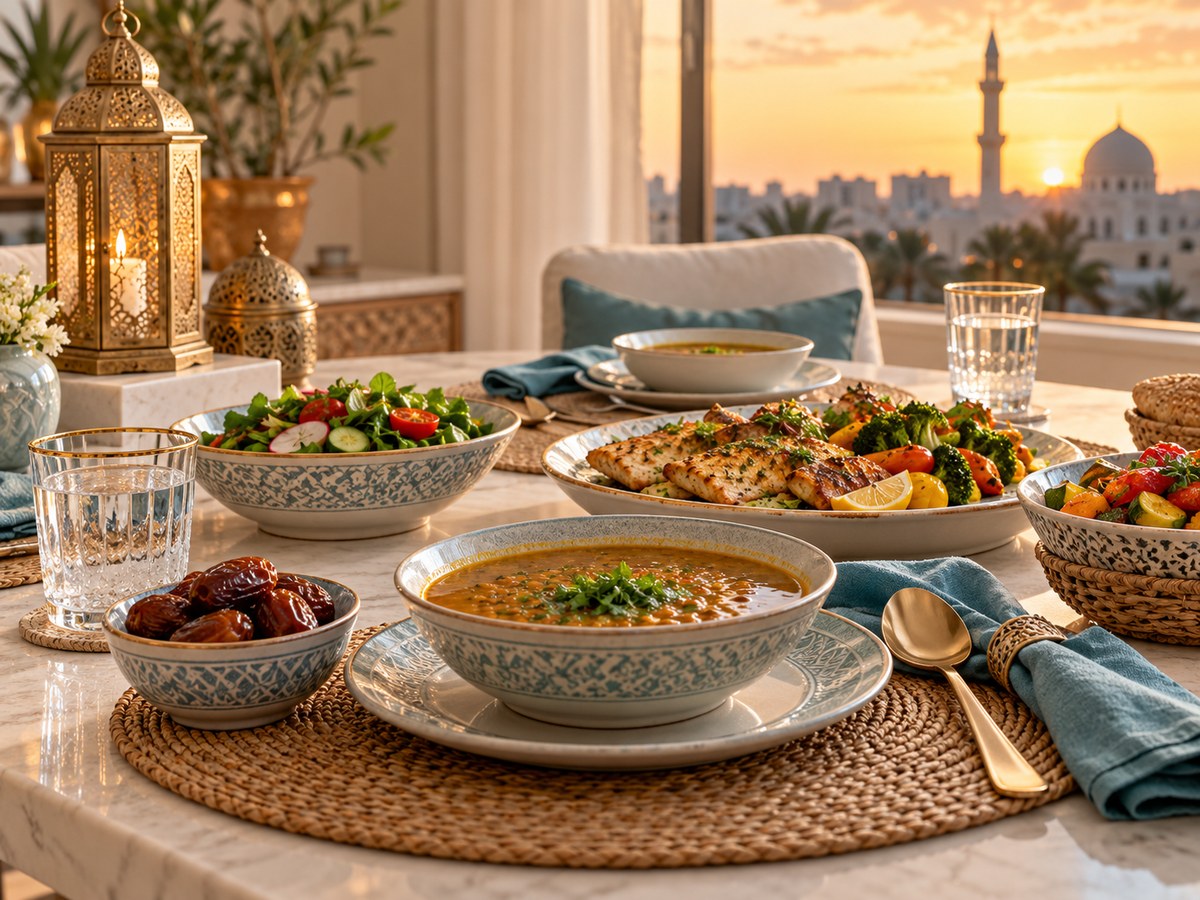
A varied, balanced diet is important during Ramadan, just as it is throughout the year. Include carbohydrate sources such as bread, grains, and pasta; protein from meat, dairy, or pulses; and vitamins and minerals from fruit and vegetables. Limit excess fats and sugars.
Key principles for healthy eating during Ramadan include:
1. Iftar
Consider breaking the fast gently with dates and water, following the Prophetic tradition. Dates provide readily available carbohydrate, fibre, vitamins, and minerals. A light start can help avoid overeating before the main meal.
The main meal can follow after Maghrib prayer or later in the evening, allowing time between courses rather than eating everything at once.
Other useful iftar considerations include:
Drink water to replace fluid lost during the day. Choose a comfortable temperature and avoid drinking too quickly.
Soups
Moderate portions of vegetable, lentil, or chicken soup can be included. Choose lower-fat, lower-salt options and limit instant soups, which are often high in salt.
Salads
Fresh green salads provide fibre, vitamins, and minerals and can help with fullness. Low-fat yoghurt or an olive oil and lemon dressing can be added.
Starters
Prepare foods such as stuffed pastries or kibbeh using healthier methods rather than deep-frying.
The Main Dish
Choose a balanced main meal with lean protein, a suitable portion of starch such as rice, potatoes, pasta, or bread, and cooked vegetables.
Desserts
Many traditional Ramadan sweets are rich in sugar and ghee, so portion size and frequency matter.
Limit sweets to two or three occasions a week, or choose a small portion rather than a large serving.
Fruit, calcium-rich milk puddings, or modest portions of jelly can be alternatives.
2. Suhoor
Have suhoor close to the start of the fast, for example about half an hour beforehand, in keeping with the encouragement to delay this meal.
Spread fluid intake between iftar and suhoor. The article suggests around 2.5–3 litres, although individual needs and any medical fluid restrictions must be considered. Avoid excessive sugary drinks, tea, or coffee.
Healthy Suhoor Choices
A balanced suhoor might include yoghurt, cheese, boiled eggs, vegetables, bread, salad, and a little olive oil. Fibre-rich foods can help maintain fullness.
Include fruit, vegetables, and whole grains such as wheat or oats, as well as pulses.
Foods containing potassium, such as lentils, bananas, dates, or yoghurt, can form part of a balanced meal.
Salty or fatty fast foods, such as some falafel or shawarma meals, may increase thirst and are less suitable as a routine suhoor choice.
Between Iftar and Suhoor
Fresh fruit and vegetables provide fibre to help prevent constipation and contribute water to the diet.
Further Healthy Eating Tips
– ينصح بتجنب القلي قدر الإمكان، واللجوء إلى أساليب بديلة لتحضير الطعام كالشواء، أو الطبخ، أو التحمير، أو التحميص.
– يفضل نزع الجلد والدهون عن الدجاج واللحوم قبل طهيها.
– يوصى باستعمال منتجات الألبان قليلة الدسم لتحضير الوجبات والحلويات.
– يفضل استبدال الملح بالتوابل بأنواعها (بهارات، وكمون، وقرفة، وهيل، وغيرها) والأعشاب المختلفة، مثل: النعنع، والبقدونس، والزعتر، والثوم، والبصل.
Nutrition Specialist: Hanadi Al Ghamdi
For enquiries or to contact a nutrition specialist, message Ghayatcom on WhatsApp: http://wa.me/966920022566